Is This Post for You?
- You get bumps on your chest or upper back — but only since you started working out regularly
- The bumps look like acne but don’t respond to acne treatments
- You re-wear gym clothes or leave sweaty clothes in your bag for a few hours before washing
- You’ve ruled out diet and skincare routine, and the chest bumps are still there
Opening Scene
Your gym bag has been sitting in the back seat since Tuesday. The workout clothes are still in there — compressed, slightly damp, sealed in a nylon bag that doesn’t breathe. It’s Thursday.
You’ve been treating the bumps on your chest with the same cleanser you use on your face. They’re not getting better. They’re not getting worse. They’re just there, scattered across the upper chest, uniform in size, occasionally itchy in a way regular acne usually isn’t.
The cleanser isn’t the problem. The bag is.
The One-Line Structural Problem
Chest breakouts from working out get misread as bacterial acne almost universally — which means they get treated with benzoyl peroxide or salicylic acid, neither of which addresses the actual organism. The misread happens because the bumps look similar. The mechanism is completely different.
The Mechanism
What you’re most likely dealing with is Malassezia folliculitis — sometimes called pityrosporum folliculitis — an overgrowth of Malassezia yeast inside the hair follicle, not a bacterial infection. It produces small, itchy, uniform papules that are easily mistaken for acne. The distinction matters because the treatment is the opposite: antibacterial washes actively do nothing; antifungal approaches do.
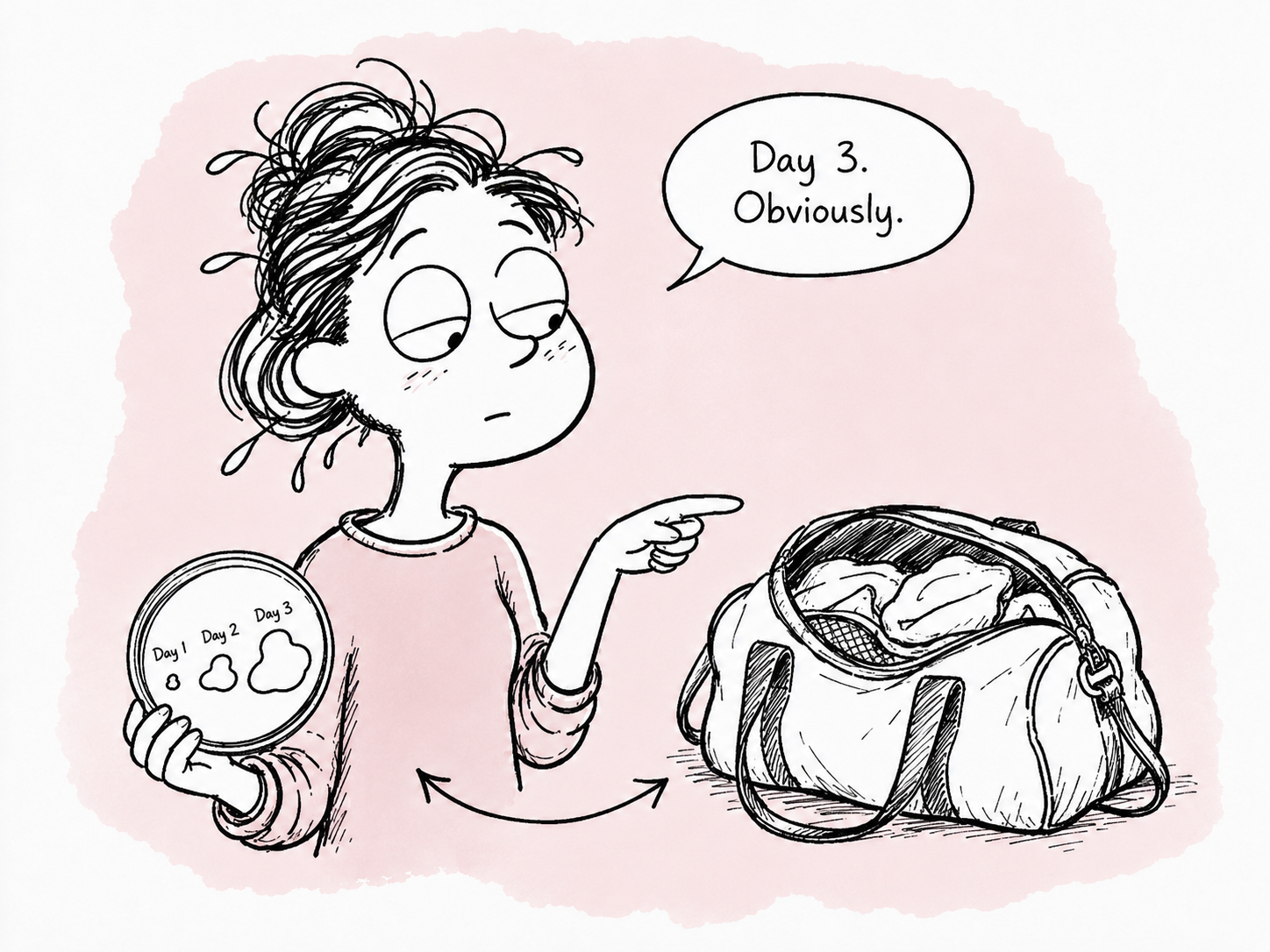
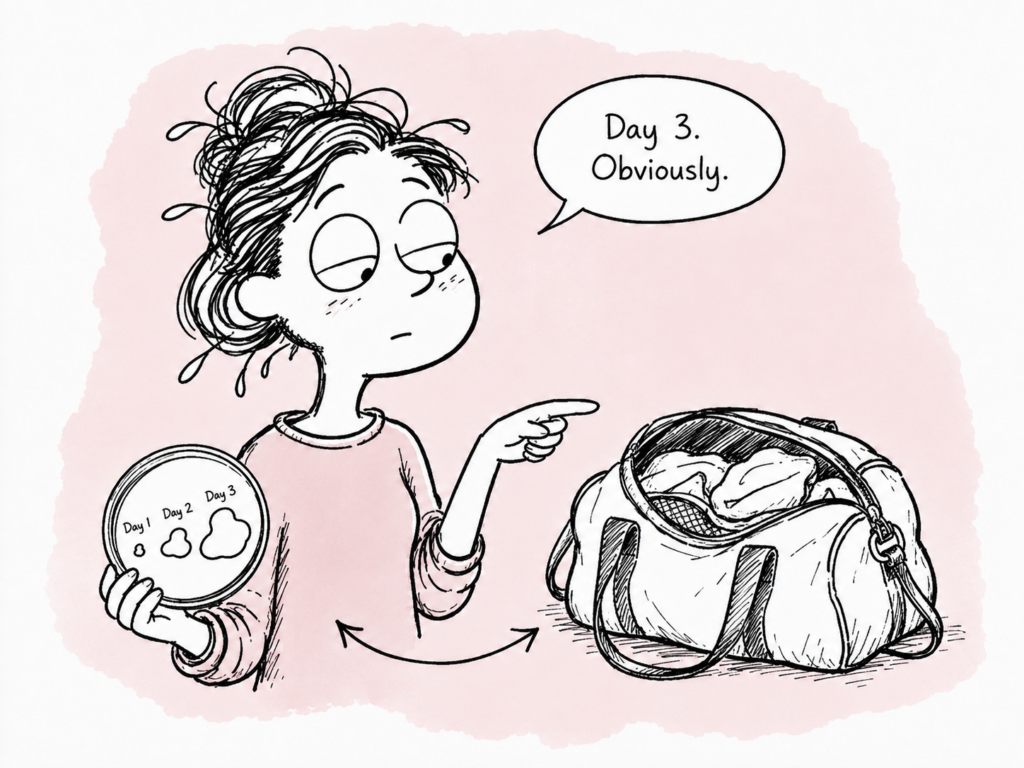
The gym bag is the delivery mechanism. Here’s why: Malassezia is thermophilic and thrives in warm, humid, lipid-rich environments. Sweaty workout clothes — compressed inside a nylon bag — maintain elevated temperature and humidity for hours after exercise ends. The clothing itself absorbs sweat-derived fatty acids and holds them in direct contact with your skin repeatedly if you re-wear without washing.
Every time you pull those clothes back on, you’re reintroducing a concentrated substrate of Malassezia nutrition directly against the chest and upper back, the body’s highest-density sebaceous zones outside the face. The follicle doesn’t need much of an opening — just prolonged contact, warmth, and something to feed on.
Think of compressed, unwashed gym clothes as a slow-release Malassezia incubator. It isn’t dramatic. It’s just chemistry running exactly as expected.
The chest and upper back are particularly vulnerable because they have a high concentration of sebaceous follicles — the same structure Malassezia colonizes on the face. Unlike the face, this area is often covered immediately post-workout, extending the warm-occlusive window past the shower.
Your cleanser is treating the wrong organism. The bag is the petri dish.
Three Things to Do Today
- Empty the gym bag immediately after every workout. Don’t let clothes sit compressed and sealed — not for a few hours, not overnight. The warm, contained environment inside a closed nylon bag is exactly the microclimate Malassezia needs to establish itself on fabric. Remove and air-dry or wash within two hours where possible.
- Stop treating chest bumps with the same routine as your face acne. Benzoyl peroxide and salicylic acid address bacterial acne. Malassezia folliculitis doesn’t respond to either. If your chest breakouts are uniform, slightly itchy, and haven’t improved with antibacterial treatment after 4–6 weeks, the organism is likely different — and the intervention needs to reflect that. Talk to a dermatologist about the specific distinction before escalating treatment.
- Note whether the bumps are itchy. Bacterial acne is usually not itchy at baseline. Malassezia folliculitis commonly is — a mild, persistent itch that’s easy to ignore but consistent. That single detail is often the clearest diagnostic separator between the two, and it’s one most people forget to mention when they describe their breakouts.
Not sure if your gym bag is your only trigger?
Skin patterns are rarely one cause. Answer 19 questions and get a full picture of what’s likely driving your breakouts.
Take the Free Skin Quiz → astica.com
Identify first. Treat second.
One Closing Question
When you notice chest or back bumps, do they tend to itch — or is it more of a visual thing with no sensation?
References
- Rubenstein, R.M., & Malerich, S.A. (2014). Malassezia (pityrosporum) folliculitis. Journal of Clinical and Aesthetic Dermatology, 7(3), 37–41.
- Prohic, A., et al. (2016). Malassezia species in healthy skin and in dermatological conditions. International Journal of Dermatology, 55(5), 494–504.
This content is for educational purposes only and does not replace professional medical advice. Always consult a board-certified dermatologist for diagnosis and treatment.